
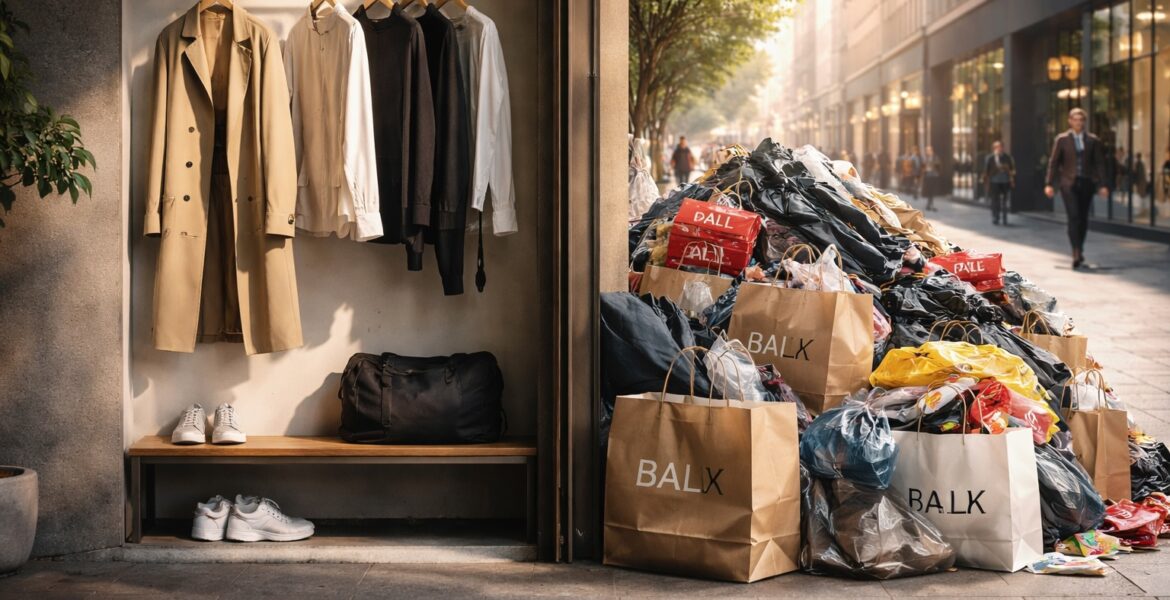
Minimalism vs fast fashion, what’s the real cost?
In this article, we’re getting into minimalism vs fast fashion.
Fast fashion promises one thing above all else: affordability.
Minimalism, on the other hand, often looks expensive, with fewer items, higher prices, and a slower approach to buying.
At first glance, the choice seems obvious. Why spend more on fewer clothes when you can buy more for less?
But when you step back and look at how clothing fits into real, everyday life, commutes, city walking, travel, workdays, and social plans, the question changes.
The real question isn’t “Which costs less upfront?”
It’s “Which costs less over time?”
Understanding the Fast Fashion Model
Fast fashion is built on speed and volume.
Multiple studies, including peer-reviewed research on fast fashion’s environmental impact, show that low-cost garments externalise much of their true cost
New collections arrive weekly. Prices are kept low by cutting costs wherever possible, such as materials, construction, labour, and longevity.
The model depends on three assumptions:
Clothes will be worn for a limited time
Trends will make items feel outdated quickly
Replacement is usually easier than repair, despite the environmental damage which costs the planet more.
In urban life, where clothes are worn repeatedly and often intensively, this model starts to break down.
A cheap garment that loses shape after ten washes isn’t cheap, it’s temporary.
The Hidden Costs of Cheap Clothing
Fast fashion’s price tag reflects only the moment of purchase, not the full cost of ownership.
Consider the following:
Fabric that pills or thins quickly
Seams that loosen or break apart after a short time
Colours that fade
Fit that changes after washing
Each of these shortens a garment’s usable life.
When clothing fails early, replacement becomes routine. Over months and years, the cycle repeats – buy, discard, replace.
What looks inexpensive in isolation becomes expensive in repetition when we compare minimalism vs fast fashion side by side.
Minimalism Isn’t About Owning Less, It’s About Buying Smarter
Minimalism is often misunderstood as deprivation. In reality, it’s a system for reducing friction and waste in daily life.
A minimalist wardrobe:
Is built around versatility
Prioritizes durability
Avoids trend dependency
Reduces decision fatigue
Instead of asking “Is this cheap?”, the question becomes:
“Will I still want and be able to wear this in two years?”
Cost Per Wear: The Metric That Changes Everything
One of the most useful ways to compare fast fashion and minimalism is cost per wear.
Let’s look at two hypothetical examples:
Fast fashion top: €30, worn 10 times → €3 per wear
Well-made top: €100, worn 100 times → €1 per wear
The second top costs more upfront, but significantly less over time.
Urban clothing is worn frequently. Items that integrate seamlessly into daily routines, commuting, walking, and travelling naturally accumulate more wear.
Minimalism takes advantage of that reality.
Urban Life Demands Durability
City clothing experiences unique stress:
Constant movement
Public transport friction
Repeated washing
All-day wear
Fast fashion is rarely designed with these demands in mind. It’s designed for appearance, not endurance.
Minimalist wardrobes are typically built around pieces that can handle:
Long days
Variable temperatures
Multiple settings
When clothes work with your lifestyle instead of against it, replacement becomes rare.
The Psychological Cost of Overconsumption
There’s another cost that’s harder to quantify.
A wardrobe full of cheap, underperforming clothes creates:
Frustration
Indecision
A sense of “nothing to wear” despite abundance
Minimalism reduces this noise.
Fewer, better items create familiarity. You know how things fit, how they feel, how they perform. That confidence removes the impulse to keep buying “just one more thing.”
Less buying doesn’t just save money, it saves attention.
Repairs, Care, and Longevity
Fast fashion discourages care. When clothes are cheap, repair feels pointless.
Minimalist wardrobes encourage maintenance:
Washing less aggressively
Air drying
Occasional repairs
Proper storage
These habits extend garment life dramatically.
A well-made piece that lasts five years instead of one doesn’t just save money, it reduces waste, shipping, packaging, and production impact.
The Illusion of Choice in Fast Fashion
Fast fashion offers abundance but limits meaningful choice.
When everything is trend-driven, individuality narrows. Clothes expire socially before they expire physically.
Minimalism removes that pressure by focusing on:
Timeless silhouettes
Neutral palettes
Functional design
These items don’t feel outdated because they were never designed to be “of the moment.”
So… Which One Actually Saves You Money in the Long Run?
In the short term, fast fashion wins on price.
In the long term, minimalism wins on:
Cost per wear
Replacement frequency
Mental clarity
Time saved shopping
Reduced waste
For people living active urban lives or moving between cities, the math becomes even clearer.
Minimalism isn’t about spending more.
It’s about spending once, wisely.
A More Sustainable Relationship With Clothing
Choosing minimalism over fast fashion isn’t about moral superiority or aesthetic purity.
It’s about aligning your wardrobe with how you actually live.
When clothes are designed to last, adapt, and move with you, they stop being disposable objects and start becoming tools.
And tools, when chosen carefully, pay for themselves many times over.
Closing Thought
The cheapest clothing item isn’t the one with the lowest price tag.
It’s the one you don’t need to replace after a short time, and the one you are more likely to truly love and grow attached to.
Further reading related to fashion & textiles
What happened to the British textile industry?